
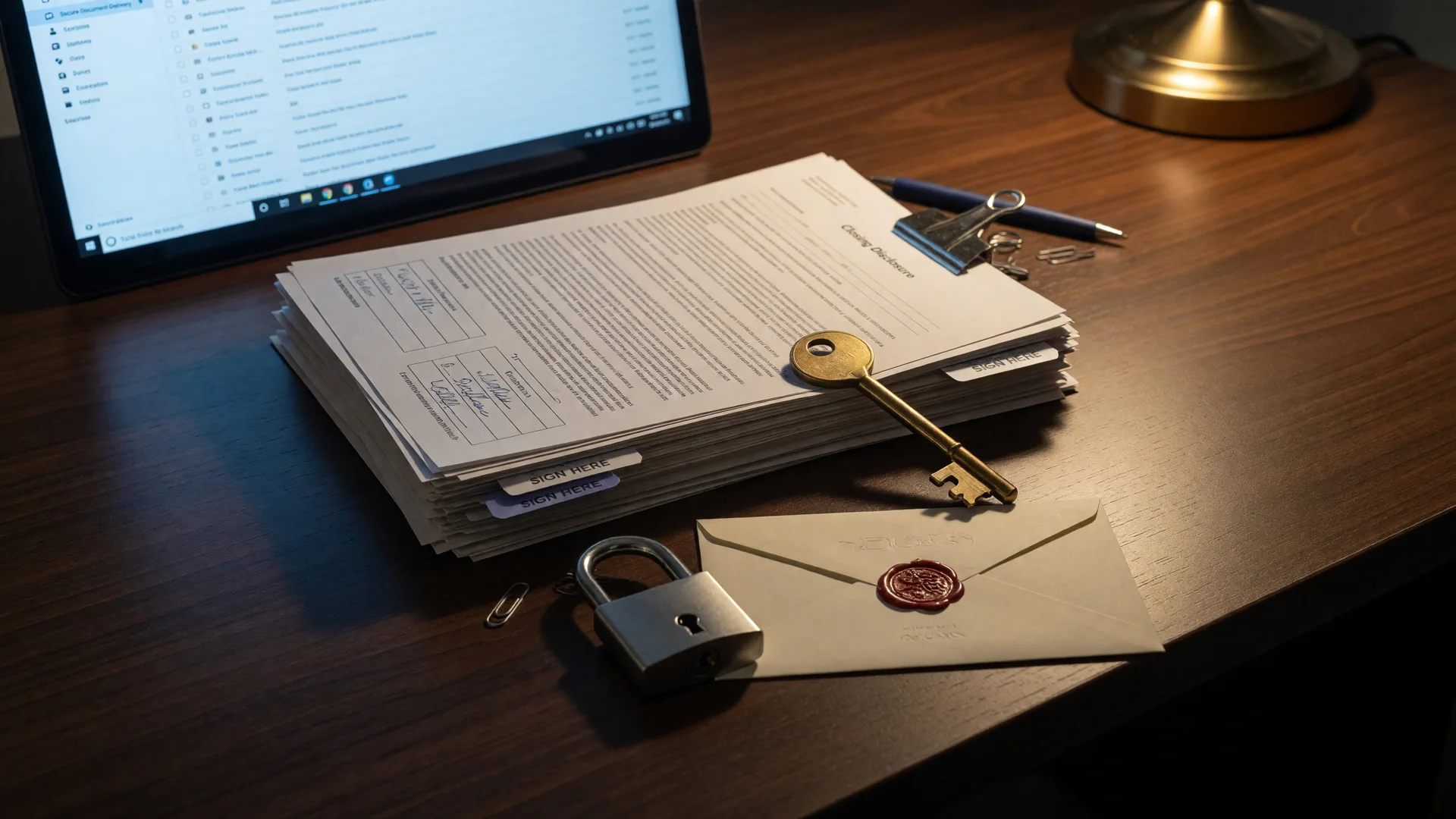
Your riskiest moment as a for sale by owner seller is not the open house; it is the wire transfer that moves your buyer's money days before closing, when a fake email can redirect six figures. The FBI's Internet Crime Complaint Center logged 12,368 real estate and rental fraud complaints and $275.1 million in reported losses in 2025. If you sell your home without an agent, protecting the closing belongs on your FSBO checklist next to pricing and disclosures.
How the Scam Works
Criminals hack or spoof an email account in the deal, usually the seller's, buyer's, or settlement agent's, then wait for funds to move. Days before closing, an email that looks like it comes from the title company announces "updated wiring instructions." The buyer's down payment, or your proceeds, goes to the criminal's account. Wires settle in minutes and are nearly impossible to reverse.
The Numbers Are Getting Worse
Real estate and rental fraud complaints jumped from 9,359 in 2024 to 12,368 in 2025, and reported losses from $173.6 million to $275.1 million. Business email compromise, the attack behind most of it, was the FBI's second-largest loss category: $3.047 billion across 24,768 complaints, about $123,000 per case. CertifID research found about 1 in 20 Americans involved in a home sale has been targeted; the FBI's business email compromise guidance and NAR's wire fraud resources cover the warning signs.
Why FSBO Sellers Are Exposed
When an agent runs the deal, the brokerage, title company, and lender cross-check where the money goes, and the office has seen these emails before. Selling FSBO makes you the coordination point: you pick the closing professional, talk to the buyer, and relay instructions. That direct line is exactly what scammers target.
The scam follows the closing process, which varies by state. In Connecticut, going for sale by owner means your attorney manages the signing and fund transfer. Washington, D.C. closings can run through a title company; Maryland closings run through settlement companies and title agents. Whatever the state, wiring instructions should come from the professional running your closing. See the Connecticut, Washington, D.C., and Maryland guides and the closing walkthrough for details.
The Five-Minute Protection Checklist
- Never wire from emailed instructions. Get them by phone or in person, from a number you look up yourself.
- Treat every "updated" instruction as fraud until verified. Any account change triggers a voice call to a number you independently confirm.
- Distrust urgency and secrecy. Scammers create time pressure and ask you not to tell anyone.
- If money has moved, act in minutes. Call your bank for a wire recall and freeze, report to ic3.gov within 24 hours, and file a police report. The FBI's recovery team attempts a Financial Fraud Kill Chain freeze, but recovery is time-sensitive and never guaranteed.
What Professional Help Actually Adds
None of this means you cannot sell your home without an agent, and it should not push you into a panicked hire. It means guardrails matter more when you run the process yourself. A professional team brings a vetted title partner, a compliance chain that flags suspicious wiring requests, and programs like Notable Pay at Close through Coldwell Banker Realty that finance staging and pre-listing repairs from your sale proceeds. The point of FSBO is saving commission, not re-creating the closing process alone.
Wire fraud belongs on every seller's checklist, and so does knowing when to bring in help. Email Robert Clarke at robert.clarke@cbrealty.com or schedule a free consultation, and keep working through the FSBO Guide library for the full playbook.