
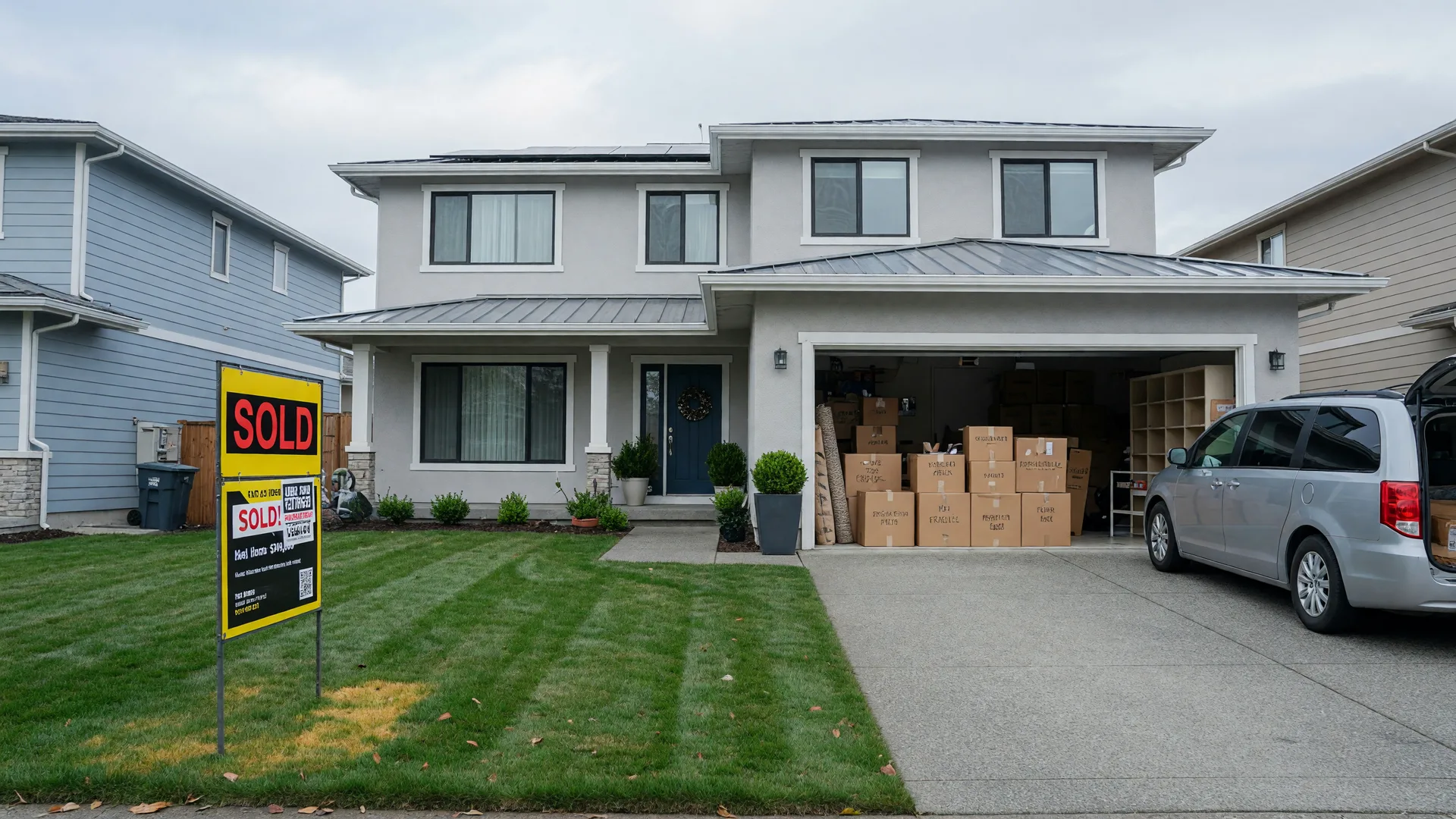
You've accepted an offer. Congratulations. But here is the truth most FSBO sellers discover too late: getting the offer is the easiest part. The real work begins now.
A standard financed home sale takes 30 to 45 days from accepted offer to closing day, according to 2026 data from ICE Mortgage Technology. Cash sales can close in as little as 7 to 14 days. FHA and VA loans often stretch to 45 to 60 days because of additional inspection requirements and stricter appraisal standards.
During those weeks, the deal can fall apart. NAR data shows that 5% to 7% of pending home sales fail before closing. Redfin's research pegged the rate as high as 13.6% in some market conditions. As a FSBO seller, you manage these risks yourself. Here is what each phase looks like.
Phase 1: Contract and Earnest Money (Days 0 to 3)
The moment your offer is signed, the buyer's earnest money deposit goes into an escrow account. This is typically 1% to 3% of the purchase price. It is held by a neutral third party, either a title company or an escrow agent, not by you.
This is also when every deadline in the contract starts ticking. Miss one, and you could lose your right to enforce a contingency or worse. If you are selling without an attorney in states without mandatory attorney review (unlike Connecticut or certain DC transactions), you need to be meticulous here. The Connecticut FSBO rules page covers the legal requirements for that state specifically.
Phase 2: Home Inspection and Due Diligence (Days 2 to 10)
The buyer hires a licensed inspector to examine the property from foundation to roof. According to industry surveys, inspection issues are the leading cause of failed deals, cited in over 70% of transactions that fall apart.
What to expect: the inspection report will list every flaw, from a cracked window seal to an aging HVAC system. The buyer's agent then submits a repair request. You have three options:
- Agree to make the repairs. This keeps the deal moving but costs you time and money.
- Offer a credit at closing. The buyer handles the work; you reduce the sale price accordingly.
- Refuse. The buyer can walk away under the inspection contingency and reclaim their earnest money.
The skill here is knowing which repairs matter and which are negotiation leverage. This is where a professional agent's experience directly protects your bottom line.
Phase 3: Appraisal (Days 7 to 20)
The lender orders an independent appraisal to verify the property is worth the agreed price. If the appraisal comes in below the contract price, you have a problem. The buyer cannot borrow more than the appraised value. The gap must be resolved by lowering the price, the buyer bringing extra cash, or the deal dying.
In a moderating market, low appraisals are more common. The median U.S. home sale price hit a record $440,600 in June 2026 according to NAR, but price growth has slowed to about 1.8% year-over-year. If you priced your home aggressively as a FSBO seller, the appraisal gap can be significant. Having a professional market analysis upfront helps avoid this scenario entirely.
Phase 4: Title Search and Insurance (Days 20 to 35)
The title company searches public records for liens, judgments, unpaid taxes, easements, or ownership disputes. Most properties come through clean, but title issues are real. An old contractor's lien, a boundary dispute, or an inheritance complication can delay closing by weeks.
As the seller, you typically pay for the owner's title insurance policy. This protects the buyer (and to some degree you) if a title problem surfaces after the sale. It is a standard closing cost and not something to skip.
Phase 5: Underwriting and Loan Processing (Days 15 to 28)
This phase is invisible to you but critical. The lender verifies the buyer's income, assets, employment, and credit. Any change in the buyer's financial situation can kill the loan. Financing falling through is the second most common reason deals fail, accounting for roughly 28% of collapsed transactions according to industry data.
As a FSBO seller, you have limited visibility into this process. An agent or loan officer can often sense trouble before you would. The Notable Pay at Close program can help ensure your home is positioned to appraise and close smoothly by getting necessary repairs and staging done upfront with zero out-of-pocket cost to you.
Phase 6: Closing Disclosure and Final Walk-Through (Days 25 to 42)
Three business days before closing, the lender provides the Closing Disclosure: the final, binding document showing loan terms, monthly payment, all closing costs, and cash required from the buyer. Timing here is strict. Rescheduling a closing requires starting the three-day waiting period over.
One to three days before closing, the buyer does a final walk-through. They check that the property is in the same condition as when they made the offer and that any agreed-upon repairs were completed. A buyer who finds a broken furnace or a roof leak they did not know about can demand repairs or concessions right before the signing table.
Phase 7: Closing Day (Days 30 to 45)
On closing day, both parties sign the final documents. The buyer signs the mortgage note and deed of trust. You sign the deed transferring ownership. The funds flow through escrow: the buyer's lender sends the loan proceeds, the buyer brings their down payment, and you receive the net proceeds after paying off your mortgage, closing costs, and any agreed-upon credits.
The deed is recorded with the county, and the transaction is complete. Keys are handed over. Done.
But "done" assumes every phase went smoothly. The reality is that one in every 14 to 20 pending home sales does not close. As a FSBO seller, you carry all that risk yourself.
What FSBO Sellers Miss About the Closing Process
The closing process is where the complexity of selling real estate reveals itself. Each phase has deadlines, documents, and dependencies that most homeowners encounter once every several years. An agent handles these transactions continuously. They know which inspectors are reliable, which repair requests matter, how to negotiate appraisal gaps, and when to push back on a buyer's demands.
The FSBO seller checklist is a good starting point for tracking everything. The common FSBO mistakes guide covers the pitfalls that trip sellers up during this exact window.
The Bottom Line
Closing a home sale as a FSBO seller is manageable, but only if you treat it like a project with hard deadlines and real consequences. Track every contingency deadline in a calendar. Know what each phase requires from you. And do not be afraid to ask for help when the stakes are high.
If you want to avoid the headache of navigating escrow, inspections, appraisals, and title work alone, schedule a free consultation with Robert Clarke. He can walk through your timeline, identify the risks specific to your situation, and show you exactly what an agent's guidance looks like. Contact him at robert.clarke@cbrealty.com.